Designing children’s rooms offers a kind of freedom that adult spaces rarely allow. There’s permission to be playful, even a little whimsical, and that’s exactly what makes exploring kids’ room color ideas so fun.
Children’s environments can evolve alongside their personalities. And today, introducing color is more flexible than ever, layered through décor, furniture, creative zones, and interactive design moments that invite kids to be part of the process.
As a seasoned color consultant, I’m writing this piece to help translate playful ideas into cohesive, livable kids’ spaces that are imaginative and engaging for kids and inspiring for parents. Get ready, adding colors to your children’s room can be more fun than you can imagine!
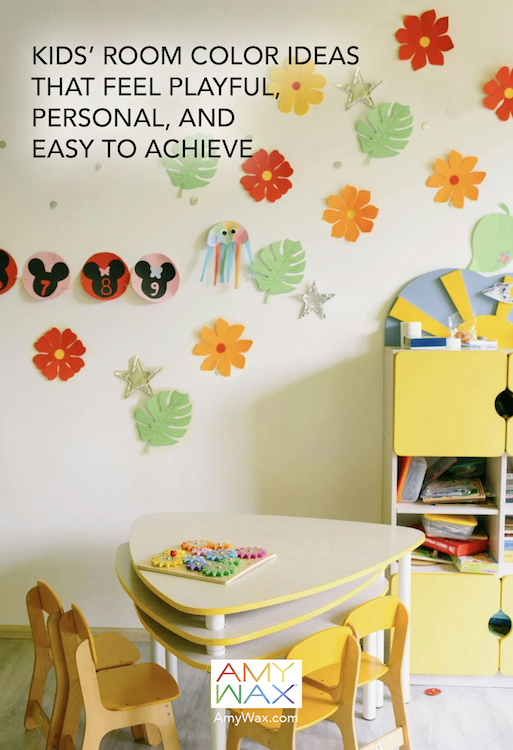
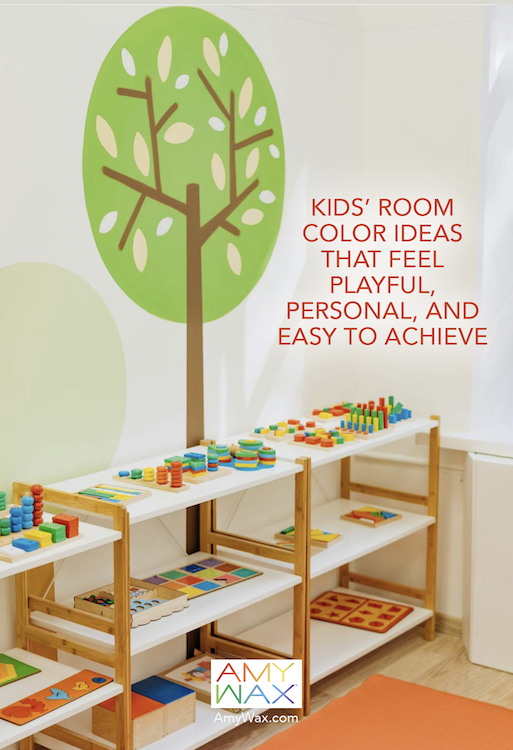
One of the easiest ways to add color to a child’s room is through wall décor rather than committing to painted walls immediately. Think of items like removable wall decals, oversized shapes, animals, botanicals, or storybook characters that can instantly energize a space while remaining adaptable as tastes change and children grow! Even in neutral rooms, these additions add personality in a layered way rather than overwhelming the space. Adding wall decor is also rewarding, as you can personalize the room with your child’s favorite characters! These decorative pieces are a wonderful reminder that kids’ room color ideas can be applied to a space rather than built in permanently.
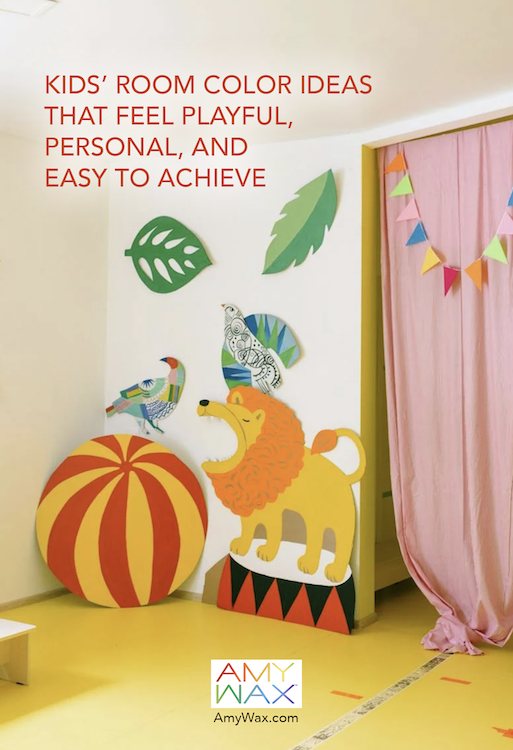
Whether you are adding wall decor, painted murals, or creative wall coverings, consider starting with a floor color that adds personality to your room. You can add an indestructible linoleum or vinyl floor, carpeting, area rugs, or simply paint the room’s existing floor. Adding a floor color is a brilliant way to make a visual statement in the room. Choose a bright color, and you’re off and running!
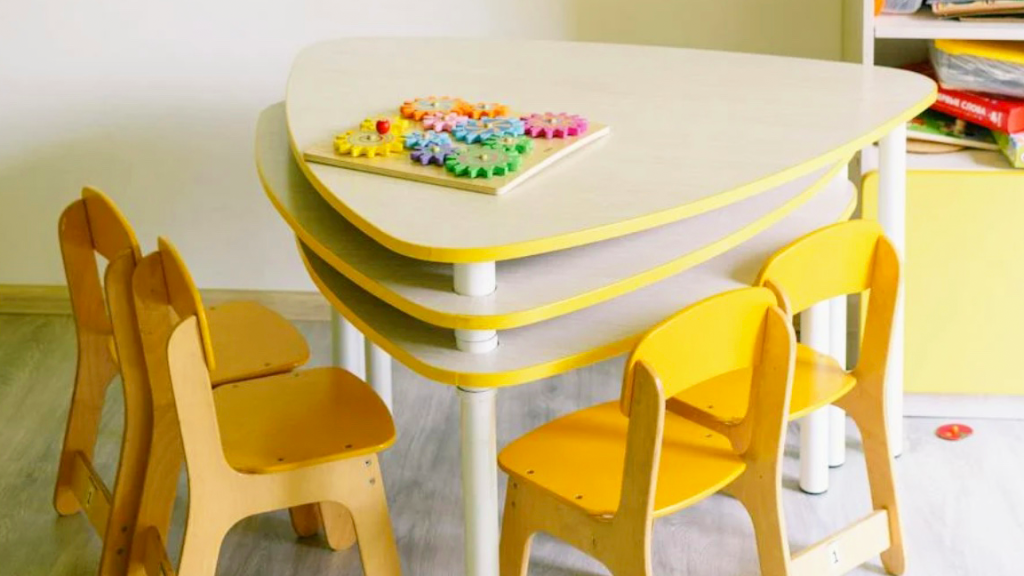
Children’s furniture has evolved beautifully over the years. Where once everything leaned toward plastics (both colors and materials), today’s options include thoughtful palettes, soft pastels, sunshine yellows, mint greens, warm corals, and sky blues – these colors are cheerful but not overdone with the primary colors of yesteryear! Our furniture and toys are now more eco-friendly with blond woods and natural materials.
Picture a small table and chair set in a happy hue, a painted bookshelf, or colorful storage cabinetry anchoring the room’s palette while being functional. These pieces introduce color at eye level, where children interact most, making the room feel like it was designed just for them!
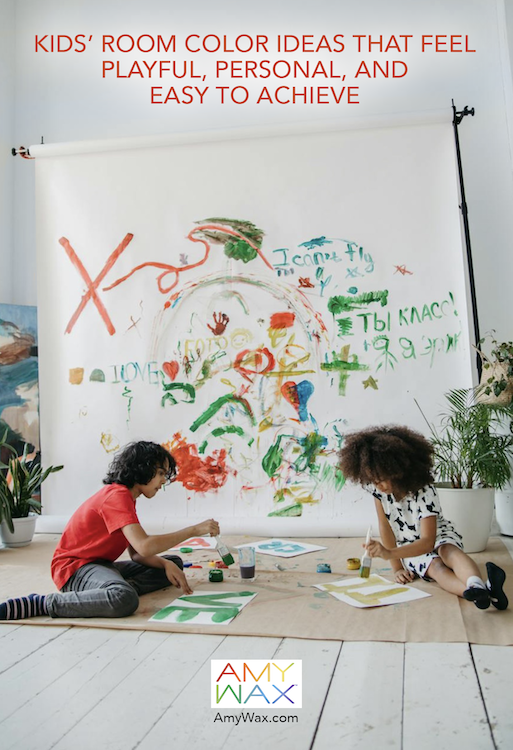
Perhaps the most meaningful way to add color to a child’s room is to let them create it themselves! Designating an area where creativity is encouraged, and mess is welcomed, builds both artistic/creative confidence and a sense of ownership of the space; this could mean installing a chalkboard wall, hanging clipboards for rotating artwork, or setting up an easel corner. But one of the simplest and most beloved solutions is the paper roll wall.
As an interior paint consultant, I began my children’s color journey at a young age. When they were growing up, we kept a massive roll of paper, nearly four feet by six feet, mounted right in the hallway outside the kitchen. It became an ever-changing mural of crayon drawings, painted rainbows, handprints, and imaginative stories. It was colorful, yes, but more importantly, it was alive with their creativity!
For families comfortable leaning in a bit further, allowing children to paint directly on a designated wall can be incredibly freeing. It removes the pressure to be perfect and reframes the room as a living, evolving environment. Everyone is an artist when they are young; let the family experience that exuberance and joy of unbridled creativity.
A single “creative wall,” perhaps in a playroom or art corner, allows children to explore color, shape, and, most importantly, self-expression. Over time, these layered marks become visual memories and a record of artistic growth!
What makes color in children’s rooms so approachable is its flexibility. Wall decals can be swapped, and furniture can be repainted. As children grow, their preferences shift, from animals to storylines, from rainbows to music, and so on, so designing with adaptable color layers allows the room to mature without requiring full redesigns every few years.At its heart, adding color to kids’ rooms stimulates imagination and creates environments where children feel energized yet safe. And perhaps the most beautiful part is this: when kids are invited into the creative process, the room becomes deeply personal. Because the most memorable children’s spaces aren’t the most polished ones. And who knows, you may have a little color expert in your home!