For years, homeowners were encouraged to remove more and more from their living spaces. Minimalist aesthetic was the trend, and decluttering became the goal; the KonMari method was in full swing! Clear countertops. Empty shelves. Minimal décor. Rooms reduced to only the “essentials.” While there’s beauty in simplicity, many people are beginning to realize something important: homes can start to feel emotionally flat/hollow when too much personality disappears!
That’s why recluttering (yes, you read that right) has quietly entered the design conversation.
Recluttering is not about filling a home with random objects or returning to chaotic spaces. It’s about thoughtfully bringing meaningful items back into the home. Books you actually read. Pottery collected while traveling. Framed photographs. Handmade ceramics. Vintage finds. Favorite mugs sitting openly on shelves instead of hidden behind cabinet doors. In many ways, recluttering is less about clutter and more about emotional connection to your interior spaces.
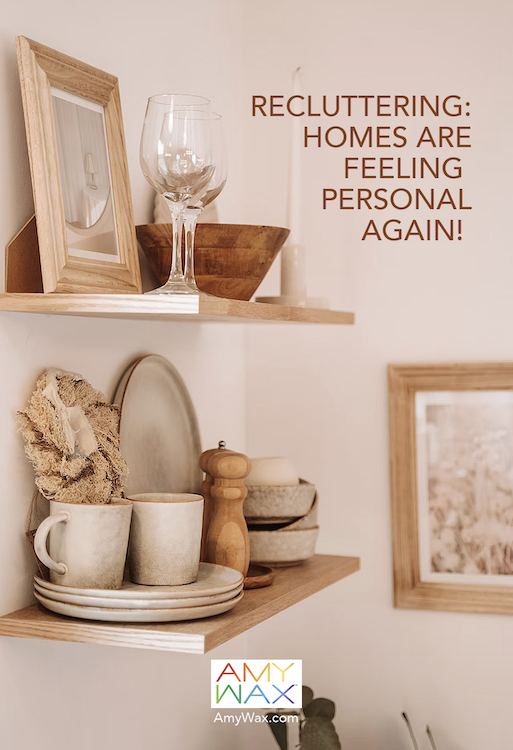
Minimalism offered a sense of calm during an overstimulated time. Clean spaces created breathing room. But after years of stripped-down interiors, many homeowners are craving something softer and more personal again. Perfectly sparse rooms may photograph beautifully, but they do not always feel emotionally comforting to live in day to day.
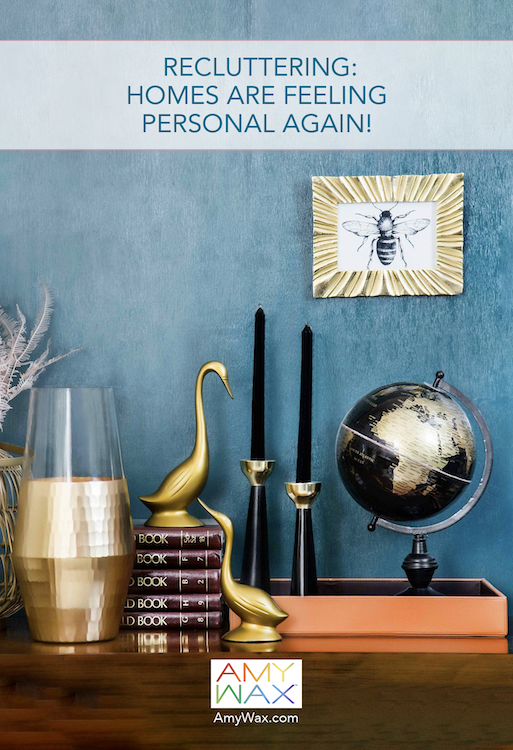
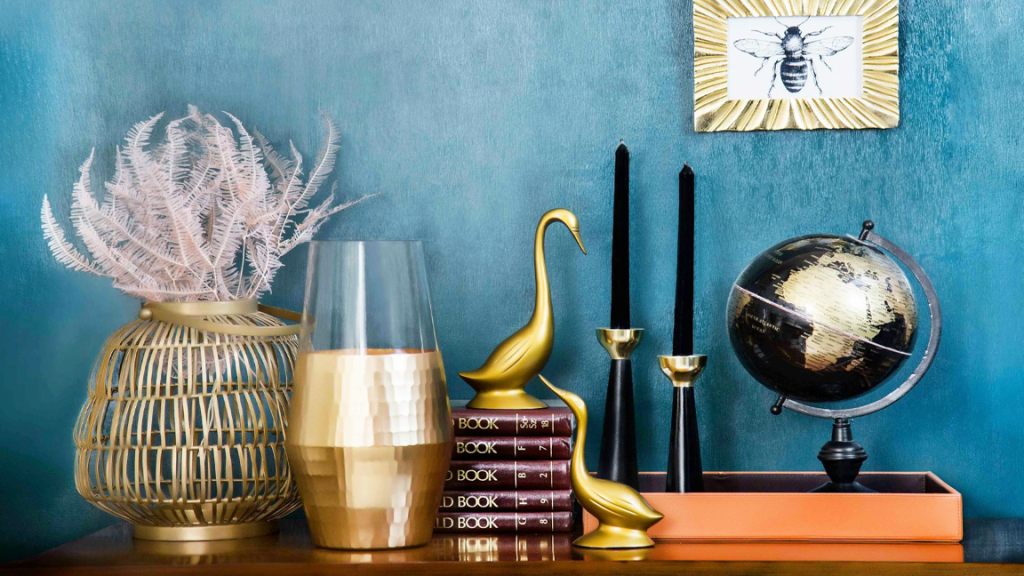
People want homes that tell stories. Spaces that reflect memory, personality, and everyday life. A stack of books beside a chair. Collected dishes on open shelving. Framed art leaning casually against a wall instead of being perfectly centered. These details create warmth in ways that highly edited spaces sometimes cannot. The shift feels especially noticeable now as layered interiors, warmer neutrals, vintage design accents, and the display of collections continue to gain popularity.
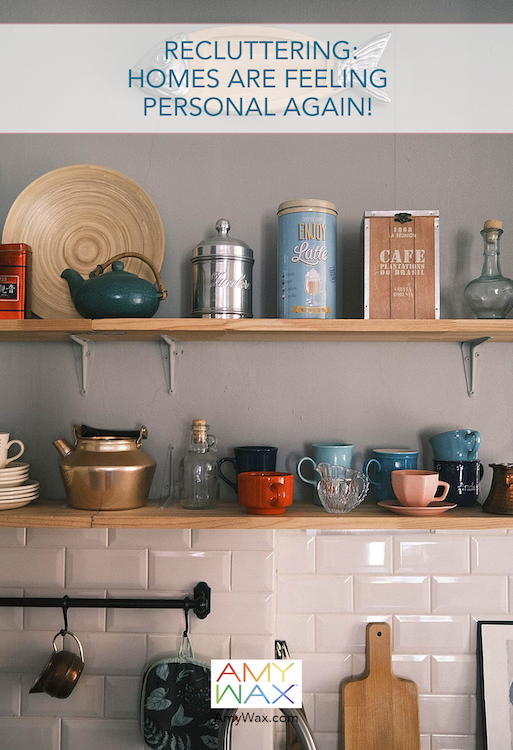
The difference between clutter and recluttering comes down to intention. Clutter accumulates accidentally, but recluttering is a curated, intentional act. The objects being brought back into the home serve an emotional purpose. They create familiarity, comfort, or joy.
A shelf lined with collected pottery and favorite glassware does not necessarily feel cluttered. It feels lived-in. A reading corner with stacked books, framed prints, and layered textures feels welcoming rather than excessive.
Even open shelving has evolved. For years, homeowners were told shelves should remain sparse and perfectly styled. Now, people are allowing kitchens and living spaces to feel more natural again. Mugs, teapots, cookbooks, items that could be everything from pieces you have created to ones you collected while you were on vacation! Collected objects are returning to view, creating spaces that feel warmer and more human, most importantly.
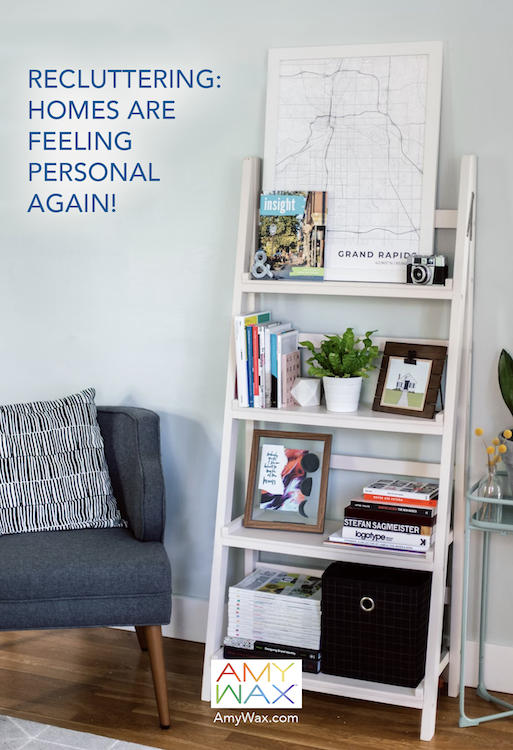
One reason recluttering works so well is that many homeowners are balancing collected objects with interesting neutral color palettes.
Warm whites, muted taupes, pale grays, dusty blush tones, natural wood finishes, and organic textures help layered spaces still feel calm and breathable. Instead of visual chaos, the result feels emotionally enveloping; this balance matters.
Loud colors do not often work when there is too much other visual stimuli, which may have been why many people were attracted to minimalism in design in the first place; their color selections were not appropriately matched to their goods!
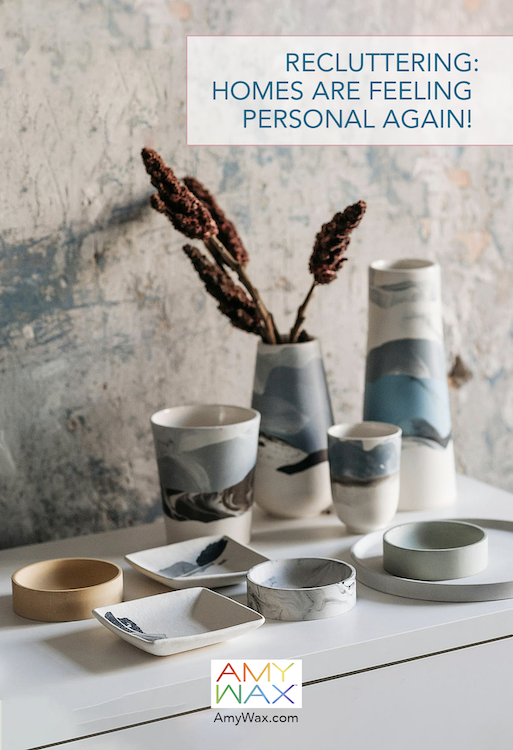
Recluttering reflects something deeper happening in our culture. People want homes that feel emotionally supportive, not simply impressive or trend-driven.
After years spent online and surrounded by digital noise, there’s comfort in physical objects that hold memory and meaning. Handmade ceramics. Old photographs. Collections gathered over time. Guests feel it too! Spaces become easier to settle into. Conversations linger longer because rooms feel authentic; they reflect the people who live there rather than resembling a staged Instagram home or Airbnb.
Recluttering does not mean abandoning organization or thoughtful design. In fact, the most beautiful examples are often highly intentional. The difference is that homeowners are no longer editing all personality out of the space in pursuit of perfection!
A well-designed home should not only look beautiful. It should feel emotionally grounding. Sometimes that means allowing meaningful objects back into everyday spaces.
As a nationwide color consultant and interior design expert, I know the craving is out there; people just need to embrace it once more!